



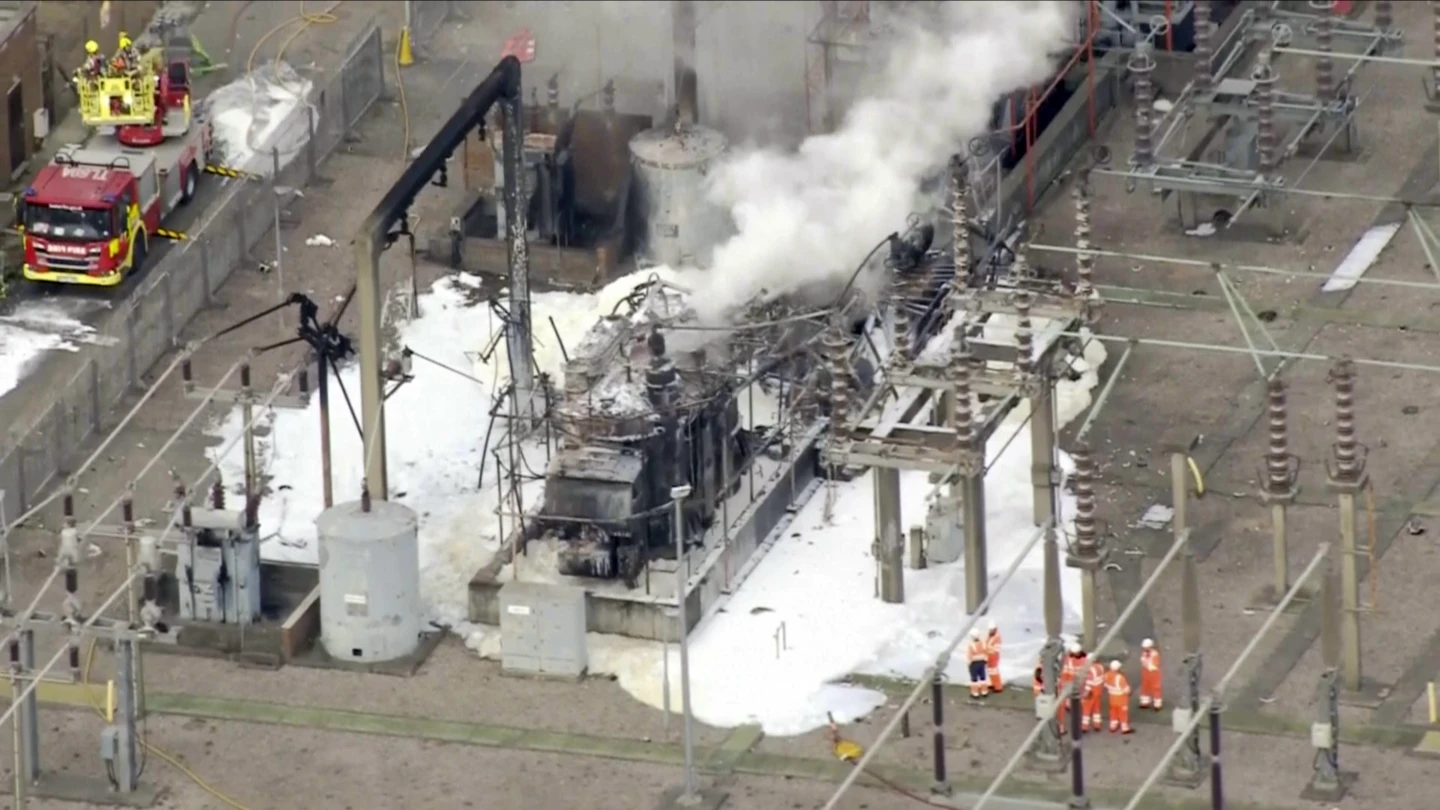
A major fire at a power substation near Heathrow Airport has caused chaos for travelers worldwide, grounding hundreds of flights and stranding over 200,000 passengers. As Europe’s busiest airport scrambled to restore power, disruptions rippled across the global aviation network, with delays expected to last for days.
A Catastrophic Power Failure
The fire, which broke out late Thursday night at a substation just two miles from Heathrow, led to a “significant power outage” that crippled the airport’s operations. Officials initially planned to keep Heathrow shut until midnight Friday, but after an intense restoration effort, limited flights began resuming by 6 p.m. local time.
Firefighters worked through the night to contain the blaze, which also knocked out a backup generator meant to protect Heathrow from exactly this type of event. Investigations are ongoing, but authorities currently see no signs of foul play—though the Metropolitan Police’s counterterrorism unit has taken charge due to the fire’s impact on national infrastructure.
Aviation Chaos: Global Travel Disrupted
With Heathrow completely grounded for most of Friday, the impact on air travel was massive:
- Hundreds of flights canceled or rerouted to airports across the U.K. and Europe, including Amsterdam, Paris, Frankfurt, Glasgow, and Manchester.
- 4,000 tons of cargo left stranded, disrupting global supply chains.
- Passengers were urged not to travel to Heathrow, leading to mass cancellations and rebookings.
Even though operations are slowly resuming, experts predict it will take up to four days to clear the backlog, as airlines struggle to reposition aircraft and reassign crew.
A Wake-Up Call for U.K. Infrastructure
The Heathrow outage has raised alarms about Britain’s ability to handle critical infrastructure failures, especially as geopolitical tensions with Russia grow. Experts warn that if a single substation fire can bring a global travel hub to a halt, the U.K. must urgently reinforce its energy, transport, and communications networks.
“The fact that one fire can shut down Heathrow tells us something is badly wrong,” said Alan Mendoza of the Henry Jackson Society. Others have called for stronger contingency planning, noting that governments have been slow to act on past warnings.
London’s Other Airports Step In
While Heathrow remains the U.K.’s main air hub, London has five smaller airports, including Gatwick, Stansted, and Luton. These airports have been working to absorb diverted flights but lack the capacity to fully replace Heathrow’s massive operations.
The Road to Recovery
As Heathrow works to restore normal operations, experts say the focus must be on:
- Restoring full power and ensuring safety checks are complete.
- Repositioning stranded aircraft and crew.
- Managing rebookings for thousands of displaced passengers.
While Heathrow’s systems are slowly coming back online, the global travel disruption will be felt for days—a stark reminder of how fragile the world’s most connected airports can be.