



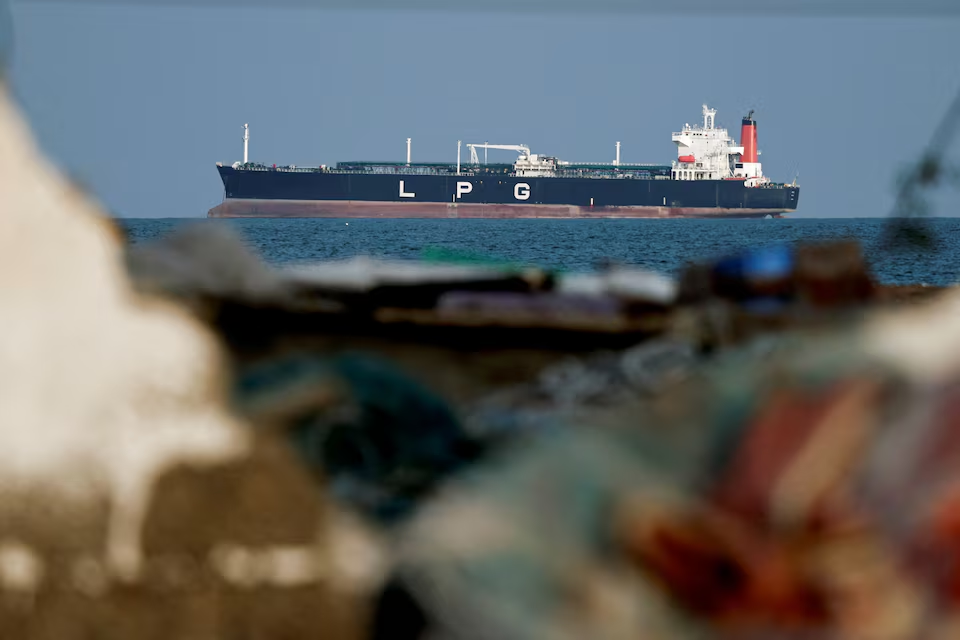
Global tensions in the Middle East have escalated further as Donald Trump urged allied nations to help secure the Strait of Hormuz, while Iran warned it would intensify retaliation against the United States and its partners. AL-Monitor+1
The latest development comes amid an ongoing conflict between Iran and a US-Israeli coalition that has targeted Iranian military sites and strategic infrastructure in recent weeks.
Trump Calls for Allied Warships
Trump appealed to several countries — including China, France, Japan, South Korea and the United Kingdom — to send naval forces to help keep the Strait of Hormuz open for shipping. Reuters
The narrow waterway between Iran and Oman is one of the world’s most critical energy routes, with about one-fifth of global oil shipments passing through it. Reuters
Trump said nations whose economies depend heavily on oil supplies through the strait should join the United States in ensuring the passage remains safe.
“Many countries… will be sending warships, in conjunction with the United States, to keep the Strait open and safe,” Trump said.
Iran Threatens Escalation
Iranian officials responded by warning that the country would step up retaliation across the region following American strikes on key Iranian targets, including military installations near the country’s main oil export hub on Kharg Island. Reuters+1
Tehran has also suggested that restrictions on shipping in the Strait of Hormuz could be used as leverage in the conflict.
Iran’s leadership has threatened attacks on US military bases and energy infrastructure in neighboring Gulf states if hostilities continue.
Global Energy Concerns
The confrontation has already disrupted maritime traffic in the Gulf and raised fears of a major energy crisis.
Since the conflict began, attacks on vessels in and around the Strait of Hormuz have forced many ships to avoid the route, causing oil prices to surge and prompting emergency discussions among global energy authorities. Reuters
The strait is considered one of the most strategically important shipping lanes in the world because it connects major oil producers in the Middle East with international markets.
No Immediate End in Sight
Diplomatic efforts appear stalled, with both Washington and Tehran showing little willingness to enter ceasefire negotiations. Analysts warn that the ongoing escalation could draw more countries into the conflict if shipping disruptions continue.
Military forces from several countries are already increasing their presence in the region, raising concerns that the crisis could widen into a broader regional war.