



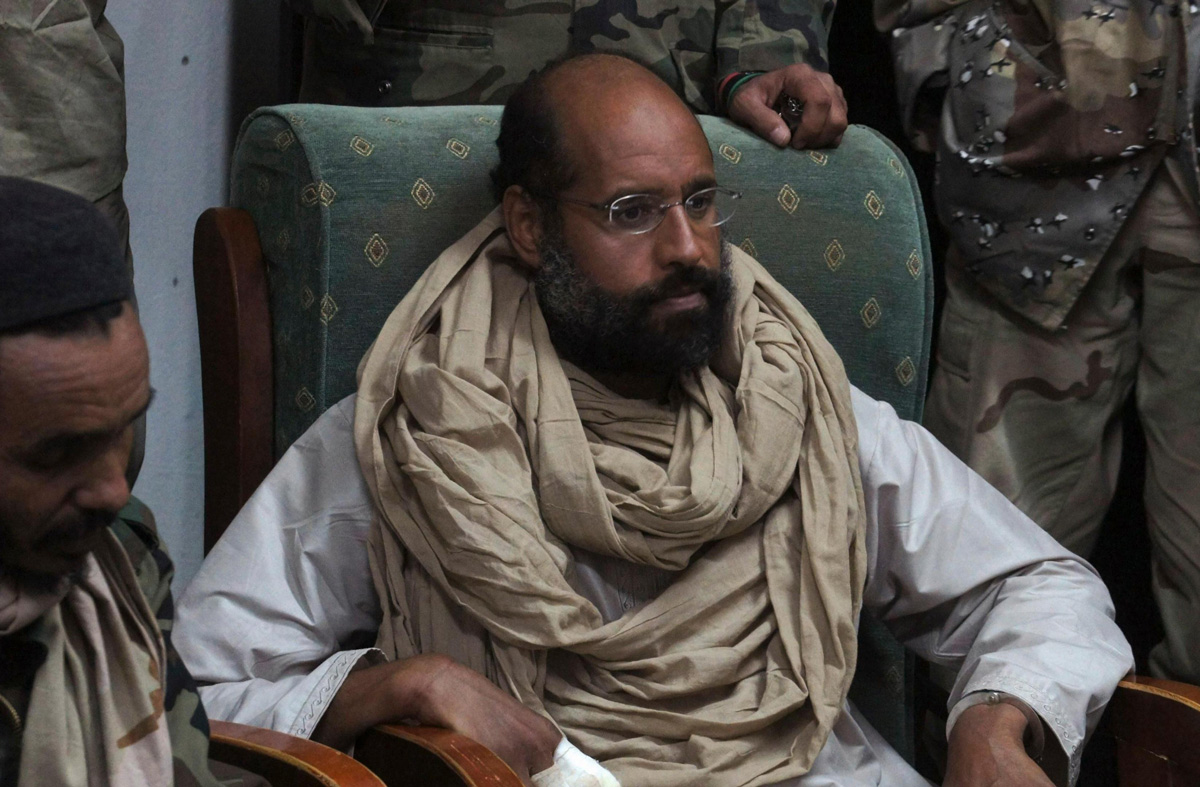
Saif al-Islam Gaddafi, the son of Libya’s longtime former leader Muammar Gaddafi, has been killed in Libya, according to local and regional reports.
Ahmed Khalifa, an Al Jazeera Arabic correspondent in the country, said on Tuesday that Saif al-Islam is believed to have been shot and killed in the western Libyan city of Zintan, where he had been based for the past decade.
The killing was confirmed by his political adviser, Abdullah Othman, though the exact circumstances surrounding his death remain unclear.
Calls for Investigation
Reacting to the news, Khaled al-Mishri, former head of Libya’s Tripoli-based High State Council, called for an “urgent and transparent investigation” into the killing, warning that the incident could further destabilise the country’s fragile political landscape.
A Powerful Heir to the Gaddafi Era
Although Saif al-Islam never held an official government position, he was widely regarded as his father’s number two from 2000 until the 2011 uprising that ended Muammar Gaddafi’s four-decade rule.
Western-educated and fluent, Saif al-Islam projected a reformist image and played a key role in efforts to rebuild Libya’s relations with Western countries in the early 2000s. He earned a PhD from the London School of Economics (LSE) in 2008, focusing on civil society and global governance.
Role During the 2011 Uprising
During the Arab Spring uprising in 2011, Saif al-Islam became one of the most visible defenders of the regime. In an interview at the time, he famously warned that Libya would descend into chaos if his father’s government fell, saying:
“We fight here in Libya, we die here in Libya.”
He was captured in Zintan later that year while attempting to flee the country and was held there for years.
Legal Troubles and Years in Hiding
Saif al-Islam faced numerous allegations of torture and violence against opponents of the regime. He was placed under UN sanctions, banned from travel, and wanted by the International Criminal Court for alleged crimes against humanity committed in 2011.
In 2015, a Tripoli court sentenced him to death in absentia. He was released from detention in 2017 under a general pardon but continued to live largely underground in Zintan, reportedly to avoid assassination.
Uncertain Implications for Libya
Saif al-Islam’s death removes a controversial but influential figure from Libya’s fractured political scene. Analysts say the killing could have serious implications for stability in the country, which remains divided more than a decade after the fall of the Gaddafi regime.
As authorities investigate the incident, many Libyans and international observers are watching closely to see how the killing will affect Libya’s already fragile political future.