



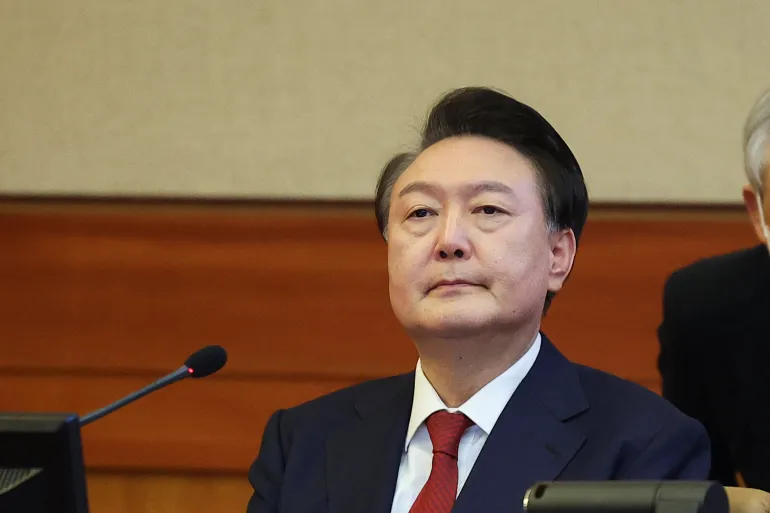
In a landmark ruling on Thursday, April 3, 2025, South Korea’s Constitutional Court unanimously upheld the impeachment of President Yoon Suk-yeol, officially ending his presidency after months of intense political turmoil.
The decision follows a constitutional crisis triggered by Yoon’s controversial declaration of martial law in December 2024 — a move the court described as a serious violation of democratic principles and a clear overreach of presidential authority.
In its judgment, the court stated that Yoon’s actions, including orders for military involvement at the National Assembly and reported efforts to detain opposition lawmakers, amounted to a grave abuse of power and a betrayal of public trust.
Although the martial law order was revoked within six hours amid strong domestic and international backlash, the damage had already been done. Lawmakers swiftly initiated impeachment proceedings, setting the stage for the court’s decisive ruling this week.
The crisis has deeply divided the nation. In the days leading up to the verdict, large-scale protests both supporting and opposing Yoon’s removal erupted across Seoul and other major cities. However, recent national polling suggests that more than 60 percent of South Koreans backed his impeachment.
With Yoon now formally removed from office, Prime Minister Han Duck-soo has assumed the role of acting president. Under South Korean law, a special presidential election must be held within 60 days.
Attention is now turning to the opposition, particularly Lee Jae-myung, who is widely viewed as the frontrunner despite facing legal challenges of his own.
The ruling marks only the second time in South Korea’s democratic history that a sitting president has been impeached and removed from office — the first being the 2017 ouster of former President Park Geun-hye.