



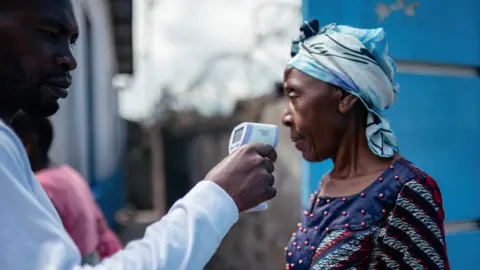
The World Health Organization (WHO) has declared the ongoing Ebola outbreak in the Democratic Republic of the Congo and Uganda a public health emergency of international concern following dozens of deaths linked to the virus.
Pasted text
According to the WHO, at least 80 suspected deaths, eight laboratory-confirmed cases, and 246 suspected cases had been reported as of Saturday in DR Congo’s Ituri province.
Pasted text
The outbreak is being caused by the Bundibugyo strain of the Ebola virus, a rare variant for which there are currently no approved vaccines or specific treatments.
Pasted text
Areas Affected
The outbreak has spread across several health zones in Ituri province, including:
-
Bunia
-
Rwampara
-
Mongbwalu
A confirmed case was also reported in the eastern Congolese city of Goma.
Pasted text
In Uganda’s capital, Kampala, two confirmed cases — including one death — were recorded among travellers arriving from DR Congo.
Pasted text
WHO Warns of Cross-Border Spread
Although the WHO said the situation does not yet qualify as a full pandemic emergency, it warned that the risk of further international spread is high due to cross-border movement.
Pasted text
The agency urged neighboring countries to:
-
Activate emergency response systems
-
Increase border screenings
-
Monitor suspected contacts daily
-
Isolate confirmed cases immediately
Pasted text
However, the WHO advised countries not to close borders or impose trade restrictions, warning that this could encourage unmonitored crossings.
Pasted text
US Monitoring Situation Closely
Reports from US media outlets indicated that several Americans in DR Congo may have been exposed to the virus, though officials say the risk to the United States remains low.
Pasted text
The Centers for Disease Control and Prevention (CDC) has activated its emergency response centre and plans to deploy additional personnel to affected areas in DR Congo and Uganda.
Pasted text
Meanwhile, the US Embassy in DR Congo has issued travel warnings urging Americans not to visit Ituri province.
Pasted text
Ebola’s Continued Threat
This marks the 17th Ebola outbreak in DR Congo since the virus was first identified there in 1976.
Pasted text
Health experts warn that the outbreak could be significantly larger than current figures suggest due to the increasing number of suspected cases and high positivity rates among tested samples.
Pasted text
Ebola spreads through direct contact with bodily fluids of infected persons or contaminated materials and can cause severe symptoms including fever, vomiting, diarrhoea, and internal bleeding.
Pasted text